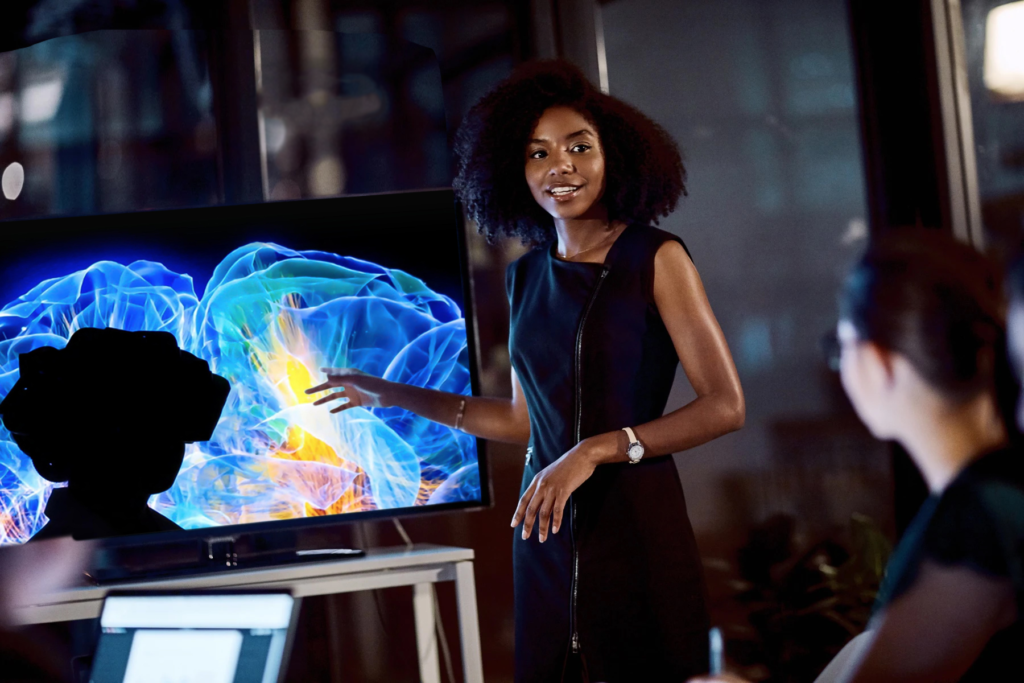

Historically, scientific research has been heavily male-centric, often overlooking the physiological and psychological differences between men and women. From lab rats used in experiments to human test subjects in clinical trials, males have been the default research models. This significant gender disparity in neuroscience was a primary focus at the recent Empowering Women through BrainHealth conference.
Addressing the Gender Disparity in Neuroscience
One of the key takeaways from the conference was that scientists cannot investigate issues they fail to recognize. Dr. Emily Jacobs, an associate professor of psychological and brain sciences at the University of California, Santa Barbara, emphasized how the invisibility of female-specific conditions in neuroscience has contributed to a vast knowledge gap. Menopause, for instance, has historically been underrepresented in brain health studies, largely because male neuroscientists may not have considered it a pressing issue.
Dr. Jacobs cited a staggering statistic: 99.5% of neuroscience research does not account for women’s health, leaving many questions about the female brain unanswered. This gap is particularly concerning given that brain-related disorders such as Alzheimer’s and depression disproportionately affect women. “It’s become clear to many of us that prioritizing women’s health requires a fundamental shift in scientific culture,” Jacobs stated. “That shift must start now—with all of us using our resources and expertise to advocate for change.”
The Importance of a Holistic Approach
The Center for BrainHealth at the University of Texas at Dallas hosted the conference, bringing together leading experts from across the country, including Dr. Judith Joseph from New York University and Dr. Jessica Shepherd from Sanctum Med Wellness. These specialists discussed the latest scientific breakthroughs and emphasized the necessity of a holistic approach to women’s brain health.
Experts highlighted the need to recognize women’s distinct neurological experiences across various life stages, including pregnancy and menopause. Mia Solis, a conference attendee, spoke about the challenges of menopause, noting that it remains vastly understudied despite being a universal experience for women. “It’s like pregnancy; not all pregnancies are the same, but identifying commonalities helps us navigate the changes,” Solis explained. “I’m here because I have a daughter, and I want to ensure she has access to better information in the future.”
Beyond hormonal changes, the conference also underscored the impact of mental health disorders on women. Research indicates that women account for approximately 65% of the 70% of Alzheimer’s patients who also experience depression. This overlap suggests a critical need to examine how neurological conditions manifest uniquely in women and how treatment strategies should be tailored accordingly.

Understanding the Rising Prevalence of Anhedonia
One of the conditions addressed at the conference was anhedonia—a psychological disorder characterized by a diminished ability to experience pleasure. Dr. Joseph pointed out that anhedonia is on the rise, largely due to poor brain health and the overuse of technology. “Human beings crave certainty,” Joseph noted. “We need to recognize the early signs of anhedonia so that individuals can seek help before their condition worsens.”
Experts expressed concerns that the decline in real-world social interactions, as people increasingly rely on digital communication, may be exacerbating the problem. A lack of sensory engagement in daily activities—such as enjoying a meal, spending time outdoors, or interacting in person—can negatively affect brain health over time.
A Call to Action for the Scientific Community
The conference’s discussions all pointed toward an urgent need for action. Attendees were encouraged to challenge the status quo and advocate for more inclusive research methodologies. “What if we addressed these neglected areas and started asking questions that no one else is asking?” Solis pondered. “As Dr. Joseph said, ‘Why wait until people are already suffering from depression before intervening?’ If we have the knowledge, we must use it to prevent mental health crises.”
The conference’s call to action extended beyond the scientific community, emphasizing the role of individuals in fostering better mental health practices. Community support, proactive mental health strategies, and lifestyle changes were all highlighted as vital components of improving women’s brain health.
A powerful video shown at the conference encapsulated the urgency of the issue: “What if we set fire to the status quo? Demand better, broader research that specifically studies women—thousands of them. We can start a revolution in neuroscience, or we can join those who already have.”
The Future of Women’s Brain Health
One emerging field that could revolutionize neuroscience is precision brain health, which focuses on individualized treatments rather than generalized group data. By considering personal experiences and specific neurological patterns, this approach could lead to more effective interventions for women’s health conditions.
As the conference concluded, experts encouraged attendees to adopt simple but impactful lifestyle changes. “Disconnect from digital screens, enjoy your food, breathe, and socialize outside of social media,” Solis advised. “That’s how we start taking care of our brain health.”
With continued advocacy and research, the hope is that future generations of women will benefit from a more inclusive, data-driven approach to brain health—one that finally acknowledges their unique experiences and needs.
Credits: The Dallas Morning News